
By: Emily Nixon
On Feb. 19, the New Hampshire House of Representatives rejected bill HB 1811, which would have repealed all of the “immunization requirements for enrollment in schools and childcare centers in the state,” and ensured, “no person shall be compelled to receive an immunization in order to access any public benefit from the state or its political subdivisions.”
This is the latest move in an effort to “Make America Healthy Again” (MAHA), a campaign by the Department of Health and Human Services (HHS) Secretary Robert F. Kennedy Jr., aspiring to “reform America’s food, health, and scientific systems to identify the root causes of the chronic disease epidemic.”
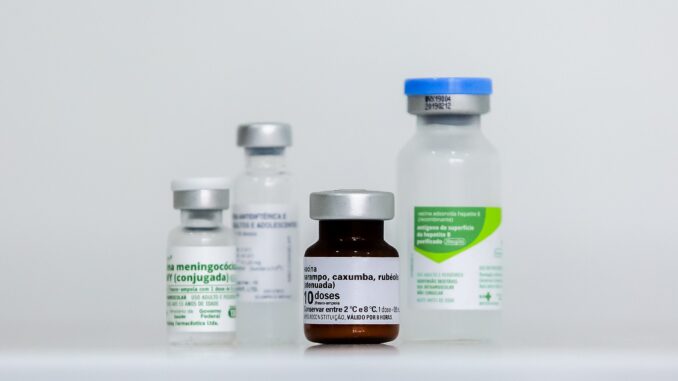
On Jan. 5, the Centers for Disease Control (CDC) removed six vaccines from its childhood immunization schedule after the United States (U.S.) President Donald Trump released a memorandum instructing the Department of HHS and the CDC to review other developed countries’ immunization infrastructure and update the U.S.’s infrastructure accordingly.
“The CDC will continue to recommend that all children are immunized against 10 diseases for which there is international consensus, as well as varicella (chickenpox),” stated a fact sheet released by the Department of HHS.
“The immunizations recommended for certain high-risk groups or populations are for respiratory syncytial virus (RSV), hepatitis A, hepatitis B, dengue, meningococcal ACWY, and meningococcal B.”
The latter set of vaccines have been removed from the CDC’s childhood immunization schedule for 2026, seen as having “too many childhood vaccines […] among Republican parents (41%) and MAHA-supporting parents (42%), and about half of Republican MAGA-supporting parents (49%),” according to a study conducted by the Kaiser Family Foundation (KFF).
Some feel the repealing of the vaccines is “performative” and based on ideology, according to an interview by Georgetown University School of Foreign Service (SFS) News with SFS Professor Emily Mendenhall, who is also the director of the Science, Technology, and International Affairs program.
“If we rooted these decisions in public health, vaccination coverage would expand, in part to protect children from having to scramble to access healthcare in a system that is, for so many, unaffordable,” said Mendenhall.
“The idea of individual choice for generally healthy children is antithetical to public health because the idea is that we vaccinate to protect those most vulnerable among us.”
As trust in public health institutions declines, the future of health in the U.S. seems to be in a “precarious” position, according to Mendenhall’s interview.
“Public health is in a precarious position right now, in part because COVID-19 was so often used as a political weapon, from masking and quarantine to vaccines,” said Mendenhall. “It will take a long time to rebuild trust in public health and medicine.”