
By: Key Jones-Ford
As of Feb. of 2026, four different queer spaces in New York City announced their final days between then and April. Four different spaces in which queer nightlife and joy were fostered and housed, in which the safety and affirmation of their identities were guaranteed. The situation is looking grim.
Queer bars, clubs, and similar spaces have existed for a long time now in the United States. New York City is known particularly for being the home of the historic gay bar The Stonewall Inn. These were places for queer people to gather safely and dance, protest, share a drink, or just exist without threat.
However, the rapid number of closures has impeded that ability.
It isn’t just a loss for the patrons. Drag artists, DJs, and burlesque performers are the blood of queer nightlife, joy, and entertainment; if they lose these spaces, they also lose their livelihoods and their ability to showcase their art. These spaces are integral to the survival and gathering of the community.
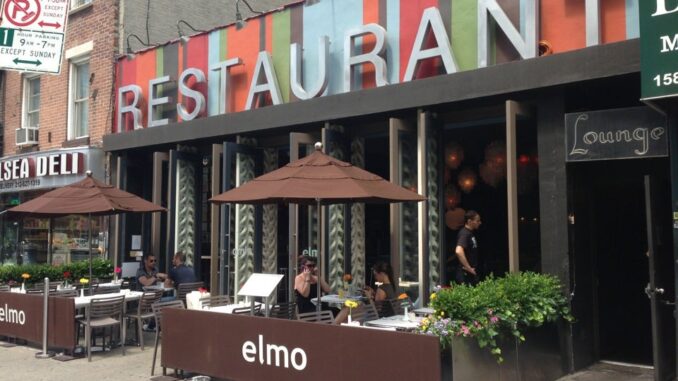
Queer spaces like Elmo.
Elmo, a restaurant with over 25 years of expertise and a heavy queer clientele, announced its closure on Instagram.
Located in the Manhattan neighborhood of Chelsea, the restaurant had survived Sandy, blackouts, blizzards, and the COVID-19 pandemic. They had even opened a hidden speakeasy known as the Coby Club, which had nightly jazz performances and burlesque on Saturday evenings. Bob Pontarelli, the owner of Elmo, explained how the building was sold to make way for a residential condo.
He described the years and experiences he had while the restaurant was open and his sadness to see it come to an end.
“To own a restaurant that has enjoyed the astonishing success and iconic stature that Elmo has is a privilege and an honor,” Pontarelli wrote. “It has been a wonderfully exhilarating ride.”
To some, it may have been just another restaurant that can’t survive in an expensive city. But to the clientele it served, it is yet another loss of a beloved space to celebrate with friends and community.
Located in Bushwick, Brooklyn, and just a few blocks away from gay nightclub 3 Dollar Bill, Pink Metal was home to the Superstar Open Set–often called S.O.S.
S.O.S was the starting point for many local performers in New York City (NYC); Hosted and produced by drag performers Xaddy Addy and Pacha Cvnti, it served as a safe space to debut a new persona or a new act.
Pink Metal was also home to many other productions with monthly shows. The bar may have been small, but it offered a variety of events. There was something for everyone.
On their Instagram, they cited being unable to make ends meet and thanked the community for supporting the bar for the last six years.
“Endless gratitude to the community, our amazing staff, and performers who poured their hearts into this place to make it what it was.” They will officially close their doors on March 15.
Similarly, queer bar The Holler was a home for drag performers to host shows and events. A weekly watch party for the long-running reality television show RuPaul’s Drag Race occurred there, alongside drag bingo, trivia nights, karaoke, movie nights, and other fun events for the community to gather together. After nine years of business, they announced on Instagram that their final day would be April 25.
Brooklyn’s Club Lambda, which closed at the end of February, was particularly hard for queer patrons of color, who already face difficulties because of their racial identities. Club Lambda hosted events that focused on black and brown members of the community, with dark rooms and dance nights, and events for the leather community.
Charles Hughes and Richard Solomon, a married couple, told amNY in 2022 that their goal was to curate a space for urban queer communities to go to and enjoy themselves.
As rights and protections for transgender individuals are being rolled back at alarming rates, as queer history is actively being suppressed and erased, and as drag is labeled as “sexual” for public consumption, it is no exaggeration that the loss of these spaces is being felt harder than ever. The rising cost of rent versus the cost of living is one contributing factor. When your primary worry is keeping food on the table and keeping a roof over your head, leisure activities start to matter less and get put on hold. Bars and entertainment venues, which rely on patronage, begin to suffer from this.
The effects of gentrification and private equitization also play a role in the closure. While several of the neighborhoods these bars and clubs were in had already pushed out the initial communities that lived there, gentrification doesn’t stop there. Instead, it continues further by pushing out the next community. Private equity then takes these businesses and buildings and trades their stocks among a select few, with the goal of eventually selling the business for profit, according to Harvard.
Once the businesses are sold, it is harder to return or to build something new in their place when you take property taxes and the cost of rent into consideration.
Pink Metal, Club Lambda, Elmo, and The Holler are only four of several bars that have closed in the last few years in NYC. It doesn’t account for the bars across the United States that are also closing for similar reasons, as talked about by Mathew Rodriguez in queer newsletter, them. In addition to Club Lambda, he mentions Ginger’s in San Francisco, California, Eagle Houston in Houston, Texas, and Denver Sweet in Denver, Colorado.
There are groups dedicated to documenting and preserving these spaces, and smaller actions are being taken. The Lesbian Bar Project aims to document all the lesbian bars across the United States and help them stay open. Several other bars have turned to mutual aid and GoFundMe pages to help keep afloat with business expenses. The question remains, though: is it enough? What other work needs to be done so that more isn’t taken?
NYC drag queen Megami was laughed at for her ‘Protect Queer Art’ posterboard during her season of RuPaul’s Drag Race. Looking back now, perhaps we owe her an apology for laughing too hard.
The queer art she implored us to protect on television needs help, now more than ever.