
By: Rami Mansi
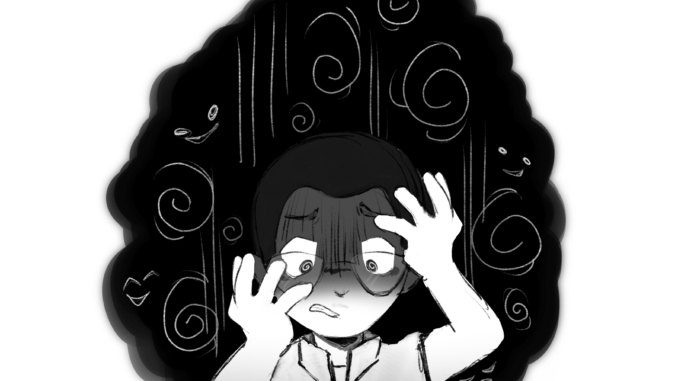
I, like many other people, am self-conscious about silly mistakes I make on a daily basis. Interrupting another person while they are speaking, giving out an unneeded reaction to a person’s statement, or when I ask one too many questions of my boss at my workplace.
Like other people in their twenties, this is my first time experiencing a lot of the things life has to offer. So why do we make it a point to shame ourselves when we make these errors? Of course, we want to strive and be the best we can be in social situations and beyond, but why am I getting upset about making wrong turns in my place of work when I just started just a mere week ago? Or why do people get upset when they don’t know how to function in parties or in nightlife areas when we haven’t been to one before the age of 21?
People in their 20’s should be less worried about making mistakes because we are all experiencing life through adulthood for the first time.
I think of adulthood as the following: You’re born on your 21st birthday, and everything before is simply learning how life works. Just like a 3-year-old is left at school for the first time away from their guardians, you, at 21, are exploring your new school or workplace.
Life has a habit of repeating itself and demonstrating various concepts in different stages of our lives; this repetitive nature of humanity allows for the transition into adulthood to feel similar to the start of someone’s life as a young human.
When you’re born, you are immediately blindsided and need around-the-clock guidance and care; no one judges the baby for not knowing how to feed itself.
When you’re entering adulthood for the first time, it’s the same concept. Why should we be judged, or rather judge ourselves, for not knowing how to add a second row in an Excel spreadsheet, or not knowing that one club in Manhattan that “you just have to go to”?
Just like when we were young, we need to be taught and take time to learn what it means to be a person in society; only now, instead of simply humanity, it is the intricate adulthood with all of its anxiously moving parts.
The idea that young adults need to be taught about adulthood raises a new question: Who are the teachers to these young adults? I’m not talking about the literal teachers of young adults, such as professors or older co-workers at your job. I mean, who will teach the 20-year-old which bars have the best vibe? Who will teach the 21-year-old how to properly order drinks at said bar? Who will teach the 22-year-old that the guy from across the bar is trying to flirt with them and that they should “totally go up and say ‘hi’”?
For the most part, you and your friends are your teachers.
People work on a three-strike basis. Someone will show you how to do it the first time, help you the second time, and watch you the third. After that, you’re on your own. The same principle applies to adulthood.
Asking your friends if you should pay off your entire credit card or do installments, asking your friends how to update your LinkedIn profile picture, and even asking them what classes they recommend taking for those required social studies credits. All of these questions, and more, are things we can learn from our older friends or people around us. It takes a village to support one person, but if you want to be supported, then you have to be a part of your village.
Being a part of a village means not getting embarrassed by asking for help; this is why young adults should not feel embarrassed by adulthood. You are not the first, nor the last, person to make mistakes, so why feel ashamed that you are experiencing normal moments of life?
I am blessed to have a village that has supported me for as long as I have known. They teach me how to avoid making mistakes they’ve made, and how to handle the mistakes I will inevitably make. However, one member of my village is the standalone reason I am the person I am today, as well as the person who taught me the idea of being born at 21: My older sister.
My older sister taught me one night that life doesn’t start until 21; everything before is just preparing you for the opportunities that will be thrown your way. This doesn’t mean you disregard your childhood, teenage years, etc. This concept means that you cherish the time you spend pre-21 and build up the image of the person you want to be by your 21st birthday.
So, whether turning 21 means you get to legally drink or turning 21 means exchanging your Calvin Klein tote for a Coach Bag, always remember that you move at your own pace. You may be born at 21 as an individual coming into your personality, but you are still a living, growing human for over two decades before that.
Cherish those 21 years and embrace the journey you went through to get here. So now you’re born, officially a well-brought-up individual who carved your path, and you are moving on up. Looking through the years that follow, are you ready to start your life?