
By: Mars Marte
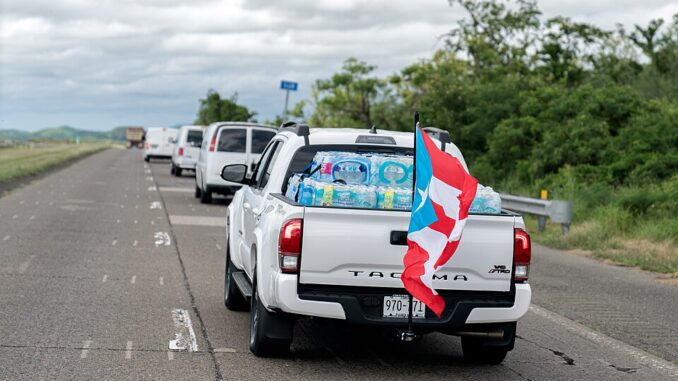
On July 31st, the Governor of Puerto Rico, Gov. Jenniffer González, announced to Puerto Rican citizens that a 48-hour rationing cycle will be taken into immediate effect following the long-standing drought that has impacted the island and the neighboring United States Virgin Islands. However, for many islanders, rationing water is built into their routine due to systemic infrastructure failures.
After what was considered a wet late winter, climate conditions in May through July were characterized as humid and dry across the Caribbean, triggering grass fires and a decrease in stream levels, according to Valentina Gomez, a writer at Rio Times.
Conditions only continued to rapidly increase, leading to it being on record as one of the driest months in San Juan in nearly 120 years, the Associated Press at NBC News explained. With record humidity hanging over the island, major water reservoirs and underground wells were left depleted, Gomez further explained.
The lack of clean water is not solely at fault of the weather; a government report revealed that nearly 60% of Puerto Rico’s drinking water is lost yearly due to leaky pipes, Adrian Florido unpacks on All Things Considered. As citizens try to access clean water, most of it is lost to the very system meant to deliver it.
While the weather laid the groundwork, the drought is a symptom of a failed system. In an interview with The Associated Press, community leader Maria Soler París expressed the reality that “her neighborhood already was experiencing severe water shortages for months”. París is not alone in her struggles and stands as one of the thousands suffering from inconsistent water.
Sonia Palacios explains her water situation on All Things Considered.
“[I] get water for a full day or two, sometimes just for an hour – often, not a drop for days, with no warning or explanation from the public water utility”.
Both París’s and Palacios’s stories carry a uniting thread; water, albeit a human right, is treated as a luxury in Puerto Rico. With communication nonexistent for the people relying on the needed services, citizens lacking water were left to remedy a predicament that could have been entirely avoided.
While Gov. Gonzalez claims the drought is out of their hands and is simply due to a lack of rainfall, these conditions were only exacerbated due to poor infrastructure and leadership. Many Puerto Ricans are aware and rightfully frustrated with the current water system in place that has proven to be unreliable. As the severity of the drought increases, so do the measures taken in response.
The 48-hour rationing cycle put in effect aims to cut service for set periods to preserve dwindling reserves, then restore it on a rotating schedule, according to Gomez at Rio Times. Yet in practice, the ration is not abiding by the set plan.
In an interview conducted by Deema Zein for PBS News, Laura N. Perez Sanchez, a citizen located in San Juan, shares what living conditions are like under the rationing.
“People who are supposed to not have water this morning have it. And there’s communities that haven’t had water for a long time now, and people are just bracing for what seems to be coming and seems to be a very hard time that’s going to come to us,”. Sanchez’s testimony highlights the mismanagement that plagues Puerto Rico’s access to public water. Even during a state of emergency, the company in charge of the island’s most vital resource is still failing to meet the needs of the people.
As access to clean water dwindles on the island, San Juan’s mayor, Miguel Romero, saw the warning flags and sought to rectify the issue prior to the drought. In late May, when signs of a drought became evident, Romero sued the island’s water and sewer authority, The Associated Press reveals. Romero’s actions represent what is needed on the island: preventive steps instead of reactive measures.
The rationing is not the only measure Gov. González has implemented. On Aug. 11, the Federal Emergency Management Agency (FEMA) began providing water trailers to Puerto Rico and will continue to do so for up to 30 days following the Puerto Rican government’s request for federal support, Victoria Arancio explains. Furthermore, Gonzalez activated the Puerto Rico National Guard to assist with hauling, distributing, and purifying water for communities hit by shortages.
There are steps being taken to help relieve the immediate stress on citizens, but these measures would not have been needed if the infrastructure and proper diligence had been in place. The cloud of chaos hanging over Puerto Rico’s water system will only continue to grow until further action is taken against the inefficient water system.
Citizens on the island or the mainland must continue to rally against the struggling leadership, in order for the true cause of the drought to be solved. Weather will continue to fluctuate, especially on a Caribbean island, but weathering the storm can be eased with suitable supervision and strategy.