
By: Emily Nixon
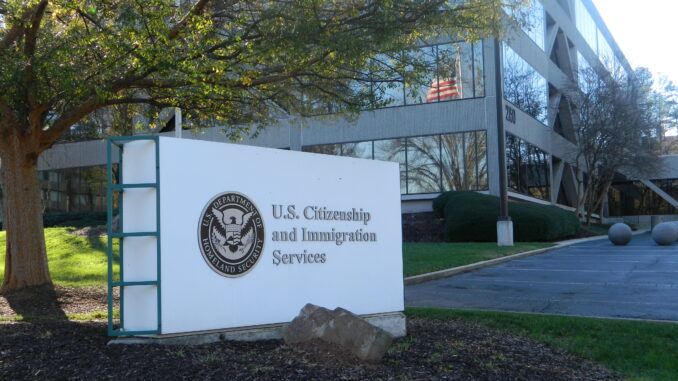
A new immigration rule is set to take effect on Sept. 18. New York City (NYC) filed a lawsuit, in conjunction with cities across the nation, against the United States Department of Homeland Security (DHS) and the US Citizenship and Immigration Services (USCIS) in response to the rule on Sept. 14.
“The rule is the latest in the federal government’s relentless assault on immigrant families and their ability to live and work in the cities they call home,” said the NYC Mayor’s Office in its announcement of the lawsuit. “In its lawsuit, the coalition argues that the new public charge rule sweeps aside more than a century of settled law, as well as decades of federal guidance establishing clear limits on how public charge determinations can be made.”
The Immigration and Nationality Act of 1952, which is a collection of various immigration laws, contains provisions for justifying why an immigration applicant is inadmissible. One ground for a candidate’s inadmissibility is when an immigration officer considers the applicant as, or likely to become, a “public charge,” like those who are receiving aid from social programs.
The new rule expands the information immigration officers can use to determine whether or not a Legal Permanent Resident (LPR) Status applicant would become a “burden” on local, state, or federal institutions.
“In its current form, this provision is known as the “public charge ground of inadmissibility,” stated a lawsuit filed by NY Attorney General (AG) Letitia James. “For over 140 years, the term “public charge” has been understood by Congress, the courts, federal agencies, and states to mean an individual who has become, or is likely to become, primarily dependent on the government for long-term subsistence.”
The previous rule allowed immigration officers to view “past or current receipt of the following public benefits in a public charge determination: Supplemental Security Income; Temporary Assistance for Needy Families cash assistance; state, tribal, territorial, and local cash assistance for income maintenance; and long-term institutionalization at government expense,” according to Congress.gov. The previous rule did not examine non-cash assistance program participation such as Supplemental Nutrition Assistance Program (SNAP).
NYC’s lawsuit will challenge “[…] the federal government’s attempt to deny green cards and visas to immigrants based on their use of means-tested, or income-based, local, state, and federal public benefits, without clear definitions or meaningful guardrails,” according to the NYC Mayor’s Office.
The lawsuits allege that this change disregards historical precedent in immigration cases and will result in discriminatory and unjustified immigration application rejections, according to the NYC Mayor’s Office.
James also filed a lawsuit with 21 other states and the District of Columbia (D.C.), on Sept. 14, alleging the rule ‘‘unlawfully removes any meaningful guidelines as to what individual immigration officers may consider in determining if certain non-citizens may be deemed a ‘public charge’—and therefore denied entry to this country or denied legal permanent residence.”
The new rule allows officers to consider any assistance at the local, state, and federal level as means to deny the green card application, which is unacceptable to James.
“Congress never intended for the public charge ground to be weaponized against immigrants and their family members who merely use supplemental or temporary amounts of public assistance to which they are lawfully entitled,” stated the lawsuit. “Yet that is exactly what [USCIS and DHS] now seek to do through the final rule challenged here.”
James previously won a lawsuit against the U.S. Government about the same “public charge rule,” which was later upheld by the U.S. Court of Appeals for the Second Circuit in Aug. 2020.
Certain immigrants filing for Legal Permanent Resident (LPR) status, also known as getting a green card, after Sept. 18 will be scrutinized through the new rule, according to the USCIS’s statement about the rule change. Applicants who are exempt include asylees, refugees, or victims of human trafficking, while U.S. armed forces personnel and family members of U.S. citizens will not be exempt from the new rule, according to the USCIS.
Benefits received by applicants prior to Sept. 18 will not be considered by USCIS agents in their process, according to USCIS.
The rule change gives immigration officers “unprecedented, sweeping new discretion to deny admission, and to block pathways to lawful permanent residency, based on participation in public programs,” according to the lawsuit.
While a formal list of which programs are or are not considered public assistance by the new rule has not been released yet, the New York Immigration Coalition (NYIC) has detailed that programs such as Special Supplemental Nutrition Program for Women, Infants, and Children (WIC), SNAP, Medicaid, Children’s Health Insurance Program (CHIP), among others could be considered by USCIS officers to deny applicants.
The NYC lawsuit rebukes the immigration officers’ discretion, rather than formal education on the topics.
“The Final Rule irrationally demands that officers – without training, information, or guidance – serve as de facto economists to research and apply ‘empirical data’ as well as ‘relevant statistics’ regarding ‘long-term outcomes for [benefits] program participants and impacts on health, employment, and employability’ in reaching their determinations,” stated the lawsuit.
“The Final Rule puts families in the untenable position of choosing between a U.S. citizen child’s access to healthcare, and their noncitizen parent’s ability to remain in the country,” stated the lawsuit.
Affected immigrants aren’t the only ones who will bear the burden of the rule change, according to James’ lawsuit.
“Plaintiff States will lose federal funding due to disenrollment in state programs, and public agencies will face substantial administrative costs as they attempt to mitigate confusion and fear,” prophesied the lawsuit. “As households forgo their legal access to benefits—such as preventative healthcare, nutritional assistance, and school lunch—public health, local economies, public education, and public safety will suffer. The Final Rule will increase the prevalence of disease, drive up the costs of medical care, and increase poverty.”
James, in her statement about the lawsuit, further explained that states and local governments would “bear direct costs, from new communications to staff training to information technology changes needed to manage the disruption,” “on top of the added strain of residents cycling on and off programs out of fear.”
Not every immigrant will be affected by this rule change, and even if an applicant is found to be a “public charge,” it will not “automatically result in a denial of the green card application”, according to the NYIC.
“The new Public Charge Rule only applies to individuals who are in the process of becoming LPRs (i.e., who are getting a green card). Public Charge may also apply to certain LPRs who leave the United States and then reenter, including those who were abroad for more than 180 days,” stated the NYIC.
The NYIC also recommends applicants continue to apply for programs they are eligible for and to talk with immigration lawyers and resources.
NYC Mayor Zohran Mamdani has vowed to protect and support the immigrant community in the face of legislative changes.
“Our immigrant communities are not a burden. They are the people who make New York City and [this] country great,” said Mamdani in his statement about the lawsuit. “We will use every tool at our disposal to ensure they can continue to live here with dignity and without fear.”