
By: Renae Visico
Hollywood has been on a generational run this summer. With the release of big-name blockbusters like “The Odyssey” and “Spider-Man: Brand New Day,” as well as pleasantly surprising indie hits like “Obsession” and “Backrooms,” there was certainly no shortage of people lining up at their local movie theater. It wasn’t just the box office that was thriving; there seemed to be a shift in the way Gen Z interacted with movies.
This shift signifies a larger pattern of Gen Z craving the human connection that was stolen from them during the pandemic.
The battle for movie theaters to stay relevant is far from new. There used to be a time when there was no other way to consume video media without going to your local cinema.
Future technological advances like TV, VHS tapes, and most recently streaming, have each brought their own challenges to movie theaters’ relevance. However, theaters always found ways to differentiate themselves from competitors, whether through the movies themselves or business practices like AMC subscription services.
But during the 2020s, and especially during the COVID-19 pandemic, streaming promised a unique level of convenience for the movie-watching experience that was hard for theaters to overcome.
Why commute all the way to watch a movie when you can watch the same one from the comfort of your own home? Why spend $20 on a movie ticket now when you can watch the same movie on Netflix in three months?
Even years after the pandemic, around 91% of American households were subscribed to a major streaming platform like Netflix, Hulu, or Disney+. In that same year, only 53% of Americans reported going to the movie theater at least once.
But as time passed, Gen Z made it clear they’re not satisfied staying by themselves at home. It seemed like every other industry, not just the film industry, was shifting towards convenience at the expense of community.
Despite being more connected than ever, Gen Z has reported an increase in loneliness compared to other generations. It’s not hard to explain this contradiction: many have been robbed of crucial opportunities to socialize in person outside of avatars on a screen. With 67% of Gen Z reporting regular feelings of loneliness, it’s clear that they crave feelings of human connection that were taken from them during the pandemic.
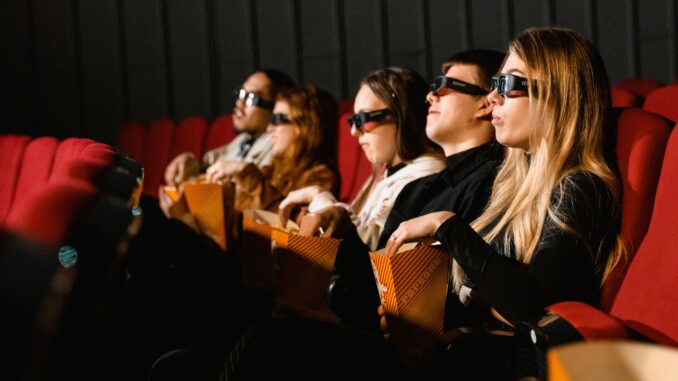
Cinemas are one of the only places where people can turn off their phones for hours and experience the same thing with total strangers. Unlike watching a movie on a streaming service, going to the theater demands someone be physically present alongside everyone else.
In a world where information is constantly being thrown at them, it seems like Gen Z has remembered how refreshing it is to spend time in a place that only requires attention to a single story.
Around 87% of Gen Z reported going to the theater during 2026, with their increased enthusiasm for cinema being a key factor in the success of movie theaters since 2019.
Gen Z’s desire for connection, in a way, is thematically reflected in the blockbuster movies they supported and raved about this summer.
In fact, the term “blockbuster” largely came from the 1977 film “Jaws,” which attracted an audience so large that they had to line up around the blocks to get tickets. Part of the film’s appeal was the sheer spectacle the movie promised, which is not dissimilar to the way Christopher Nolan’s “The Odyssey” lined up large audiences with the promise of an immersive practical experience free from CGI.
Despite my personal grievances with the changes Nolan made from the source material, “The Odyssey” is a compelling cautionary tale that warns against taking advantage of hospitality. Nolan took one of the oldest recorded stories and reinterpreted it to resonate with modern younger audiences.
“Spider-Man: Brand New Day,” which is currently the third highest-grossing movie of all time, depicts Peter Parker as he learns how self-destructive it is to isolate yourself from forming a community. The movie would have drawn a large audience just by virtue of being a Spider-Man movie, but to see that the highest-earning Spider-Man movie is also the most vulnerable is telling.
All the movies released this summer sparked larger conversations long after they were released. Discussions about Bear’s morality in “Obsession,” Peter’s unwavering empathy in “Brand New Day,” and Odysseus’s characterization in “The Odyssey” demonstrate that movies aren’t just passing moments to Gen Z.
This is just scratching the surface of the Q effects movies had on Gen-Z this summer. Who knows how many more people will line up for “Avengers: Doomsday” or “Dune: Part Three” in the winter?
Until then, it’s been nothing short of refreshing to see a shift this summer that Gen Z has been leading not just towards the revival of movie theaters, but towards human connection.