By: Manuel Polanco
When the Milwaukee Brewers beat the Tampa Bay Rays and won the World Series for the first time in franchise history, it caused two things to ring in fans’ heads. One (if you’re a Brewers fan) is: how can the Brewers get better in the offseason and defend their championship? Second, will baseball be played next year?
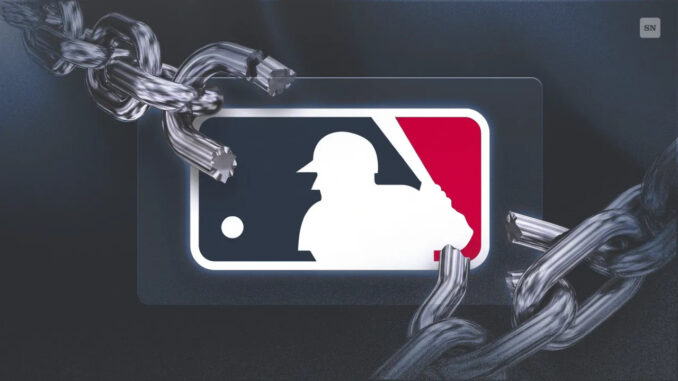
The impending Major League lockout has fans and players alike wondering if a full season will occur next year. But first, why is there a hypothetical lockout in the first place? For starters, the collective bargaining agreement (CBA) between Major League team owners and the MLB Players Association is set to expire on Dec. 1.
The bargaining agreement, CBA, was an agreement between both sides that came to terms with player salaries, working conditions, and employment. They last reached an agreement during the 2021-2022 offseason, where the lockout lasted from Dec. 2, 2021, to March 10, 2022. This lockout delayed the start of the season by one week and lasted 99 days.
Even though it took 99 days for them to come to an agreement, both sides still got a deal done, but why is 2026 the outlier? Simple: the debate over implementing a salary cap in the sport. A salary cap is a league rule that limits how much each team can spend, essentially evening the playing field in free agency.
The National Football League (NFL), National Basketball Association (NBA), and the National Hockey League (NHL) all have a cap in place to either encourage spending or to limit high spending. MLB, however, does not have such a cap (for now) in place, and many people feel that implementing one will limit big-market teams from spending egregiously.
Proponents of a salary cap believe it will give every team a fair advantage in spending. In an article titled “Details of MLB’s proposed salary cap and floor system”, writer Mark Feinsand notes, “ Under the league’s initial proposal, the 2027 salary cap — a hard limit on how much a team can spend on its player payroll — would be set at $245.3 million, while a salary floor — the minimum each team would be required to spend — would be set at $171.2 million. No Club would be permitted to exceed the cap, while all 30 Clubs would be required to comply with the floor. On Opening Day 2026, 10 of the 30 Clubs would have fallen in between the proposed cap and floor.”
The main counter argument to this is that the new CBA would benefit owners who don’t spend in free agency. One example is the then Oakland Athletics having to abandon their Oakland Coliseum because their owner, John Fisher, had a history of cheaping out in free agency and investing in the stadium they played in. Note: Fisher has a net worth of $2.1 billion dollars. Owners want to implement a salary cap to avoid paying players large amounts of money.
This whole dilemma stemmed from the Los Angeles Dodgers and their monumental spending over the last couple of years. It started with their insane 10-year $700 million contract with superstar Shohei Ohtani that had $680 million dollars deferred until the end of the contract. Ohtani’s base salary with this deferment is two million dollars annually. When Ohtani won MVPs in 2024 and 2025, he earned two million dollars each season (wow.)
They kept on spending when they signed Japanese pitchers Yoshinobu Yamamoto and Roki Sasaki to lucrative deals in the same offseason they got Ohtani. This upset fans because they felt it was unfair that the Dodgers essentially spent $1 billion in one offseason, something not many teams can do. But the opposite of that is clear: spending doesn’t equate to winning.
Another high-spending team is the New York Mets, who are usually at the top when it comes to team payroll, and yet they haven’t made the playoffs since 2024, and even then the team’s payroll wasn’t as high as it is now. The MLBPA doesn’t agree either. “The MLBPA’s position remains unflinching: The two dirtiest words in the English language are salary cap. Though the size of the league’s proposed floor initially intrigued some on the players’ side,” an article from ESPN reporter Jeff Passan states.
“They also believe the system MLB is proposing would be actively worse for them and that addressing competitive balance does not necessitate a salary cap.”
As Dec. 1 looms, so does the inevitable lockout that will come from it. Fans, reporters, and players alike feel like a lockout is coming, and as both sides try to come to an agreement, the future is uncertain.