
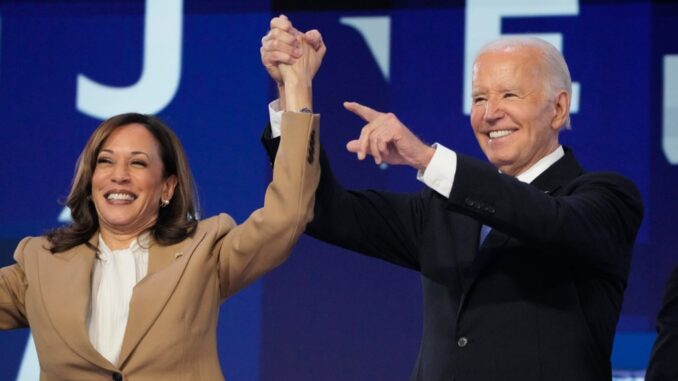
By: Margot Dragos
After spending nearly a year out of the spotlight, Former Vice President Kamala D. Harris has returned with a new political memoir called “107 Days.” Its title references the short, unprecedented length of her 2024 presidential bid, which she lost against President Donald J. Trump.
In “107 Days,” Harris not only wants to paint a portrait of her short-lived presidential campaign– she wants the credit the Biden administration failed to give her.
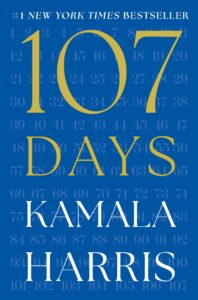
The memoir addresses many questions Americans had about her campaign as well as the Biden-Harris administration, such as Biden’s ability to govern despite his old age. However, she does this while recounting many of her achievements as Vice President, most of which she felt were not adequately appreciated by Biden’s team or the media.
Harris refers to herself as a “loyal person” and says she did not want to throw Biden under the bus or try to force him out of running for re-election. Shortly after this, she notably writes that leaving the decision up to Biden was a result of “recklessness” and “the stakes were simply too high […] It should have been more than a personal decision.”
Despite her loyalty, she writes that the Biden family still had doubts about her allegiance to them. Former First Lady Jill Biden even questioned Harris’s husband, Doug Emhoff, about their support for Biden’s re-election campaign after his concerning debate performance. While Harris says she was always supportive and loyal to Biden, she writes that his team did not offer her the same grace.
Harris claims that Biden’s team would not defend her or offer any support when the media attacked her with remarks such as calling her a “DEI hire”. She says that “getting anything positive said about my work or any defense against untrue attacks was almost impossible.”
Harris was also incorrectly referred to as a “border czar” throughout her vice presidency, despite the fact that she was only assigned to tackle immigration’s causes, not border security.
She writes, “When Republicans mischaracterized my role as ‘border czar,’ no one in the White House comms team helped me to effectively push back […] nor to highlight any of the progress I had achieved.”
She then goes on to talk about winning commitments of “$5.2 billion” in investments for the regions she was assigned to (El Salvador, Guatemala, and Honduras) and how, although the investments added jobs and banking services, the White House staff “stalled” with reporting on them.
She continues recounting her achievements throughout the book, talking about her role in foreign policy and her achievements even as district attorney from 2004 – 2011. After being kept out of the spotlight for four years and only thrust back into it to run a losing re-election bid, it makes sense that Harris would want to remind Americans of her record.
Harris believes that the 107 days she had in the spotlight at the top of the ticket were not enough to win the election. While saying there are many factors that resulted in her loss, Harris ultimately blames this lack of time as the reason she lost the 2024 election, as she said in a recent interview on The View.
Biden’s stubbornness is the direct reason why Harris had such little time. If he had decided not to run for re-election sooner and endorsed Harris then, the results may have played out differently.
Political analysts will be studying the anomaly of the 2024 election for years to come, but the results will always be the same. We will never truly know if Biden or Harris could have beaten Trump in any scenario. Harris’s focus as of now seems to be preserving her record and viewing the government from the outside, or being “with the people,” as she puts it in the afterword of the book.
If you were strongly invested in the 2024 election and don’t mind reliving it, “107 Days” by Kamala Harris is worth the read. It covers practically every major moment of the Harris campaign from a new perspective, even if it’s not the most objective one.