
By Eddy Prince
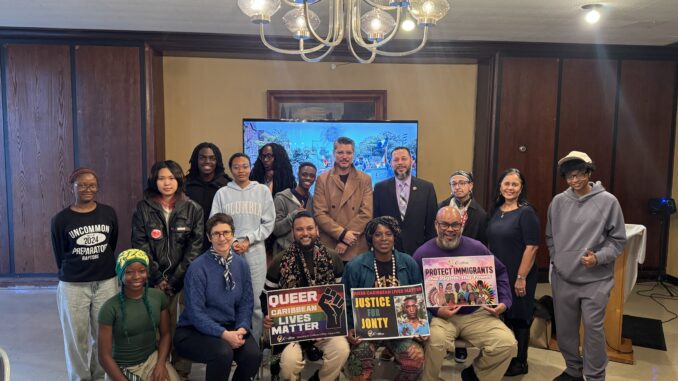
Brooklyn College’s (BC) LGBTQ+ Resource Center and Black and Latino Male Initiative (BLMI) collaborated to screen “Caribbean Queen” on Nov. 13. The film tells the story of Q, a young Caribbean individual determined to be the Queen of NYC’s West Indian Day Carnival Parade, all while facing discrimination and adversity throughout their community.
This screening was a collaborative effort between the Caribbean Equality Project and the CUNY LGBTQIA+ Consortium.
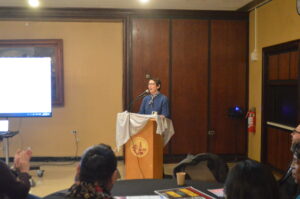
The screening opened up with introductory remarks from Kelly Spivey, the Director of BC’s LGBTQ+ Resource Center, and Spivey welcomed Sekiya Dorsett, the director of “Caribbean Queen,” to the podium.
“This is a very powerful movie. I’m from the Bahamas, and when I came to New York City, I was searching for a home,” said Dorsett. “Ever since then, I’ve been always asking myself, ‘Where is home?’, and I found home in ‘The Revival Women and the Word’, where I found black lesbians I could connect to.”
“This movie means so much to me. I was never able to wrestle with my Caribbeanness and my queerness until this moment. [“Caribbean Queen”] for me is really me unpacking that and coming to terms [with that]. One of the themes that you’ll see in the film is this line, ‘We have always existed.’ That is our message here.”
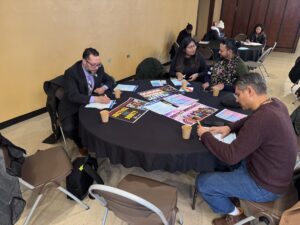
This line, repeated throughout the film, serves to bring these stories to light. “Sometimes, there’s a lot of vulnerability in telling our stories,” said Mohamed Q. Amin, the founder of the Caribbean Equality Project and executive producer of “Caribbean Queen”. “There’s also a lot of risk in telling our stories. For a lot of queer and trans people now, just being visible and just being themselves can be dangerous. So how do we tell our story?”
“I think ‘Caribbean Queen’ is all about visibility and representation, not just of Caribbean culture, but queer Caribbean people,” said Amin. “It’s about making sure that students see themselves in the film, but also being able to tell their stories. It’s about us telling who we are, what makes us unique as Caribbean people. “Caribbean Queen” is storytelling meeting advocacy, it’s art meeting activism.”
The film, which premiered in the summer of 2024, also sought to raise awareness about the violence perpetrated against queer people.
Josiah Robinson, an openly gay Grenadian singer known as ‘Jonty’, was murdered in Grenada, and the subsequent lack of investigation elicited a heavy response from LGBTQ communities. The slogan “Justice for Jonty” was made and showcased in NYC’s West Indian Day Parade.
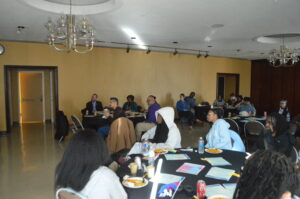
“It wasn’t until [celebrities like] Beyonce’s publicist, Yvette Noel-Schure, and Tyler Perry came together to offer up $100,000 for information leading to the arrests of [Jonty’s] attacker that it hit international media a little bit more,” said Amin. “When the Caribbean Equality Project participated in the West Indian Day Parade, this was our sole message. Our message to the judges and to the West Indian Day Parade Committee was raising awareness for this queer Caribbean person that was killed in Grenada.”
Amin went on to discuss how Jonty’s death was a call to action and explain just how the queer community took action.
“Justice for Jonty, Queer Caribbean Lives Matter, […] we had over 150 people march in the parade carrying these posters,” said Amin. “It got such wide coverage to the point where it actually created a rippling effect on the country of Grenada. A lot of LGBTQ people [who study in Grenada] were questioning whether they are safe in the country. But because of the widespread coverage, the police department poured more time and resources into the investigation. Two weeks later, they were able to arrest someone that is allegedly the suspect in the case […] I think we’ve gotten justice.”
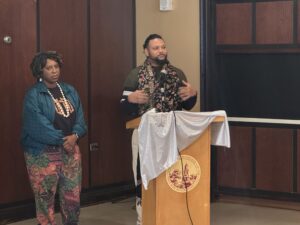
“It was important to us that we had queer representation [in the film],” said Karl O’Brian Williams, executive producer of “Caribbean Queen”. “Representation not just in the film, but behind the scenes as well. That was something that was very important to Sekiya [Dorsett] and became important to all of us as […] it was part of the intention to embrace the community. So all of these things were authentic, intentional, and community-driven.”
“We had this concept throughout the film, ‘We have always existed,’” said Amin. “It’s something I said to [Dorsett]. I told her, as Caribbean people, we have always existed. But because of the harm and trauma, our visibility is why we have often been silent. Because of all the safety issues, we haven’t always been visible. And [Dorsett] loved that. We have always existed. And then we added that into the script, and it had imparted this presence into the film in and of itself.”
“Caribbean Queen” stands as a celebration of self-expression and acceptance. Adversity and prejudice only affect you if you let them.