
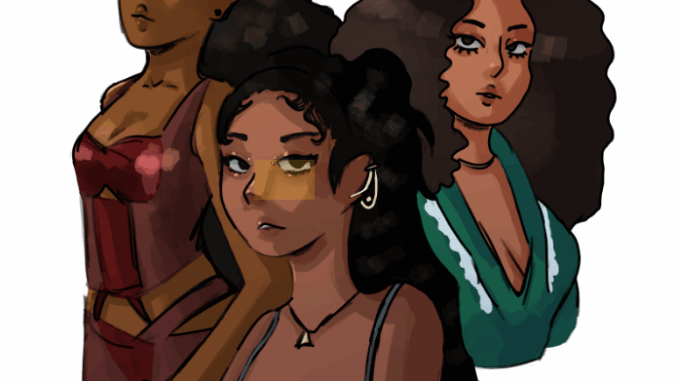
By: Serena Edwards & Rami Mansi
Mel B. of the Spice Girls, Normani from Fifth Harmony, Leigh-Anne from Little Mix, and now Manon from Katseye. All household names, all the sole Black women in their successful girl groups.
Black women have been used as a marketing tactic and a diversity pick rather than utilized for the talent and unique flair that they bring to their group.
Manon Bannerman, from the global girl group Katseye, is the only Black woman in her group. On Feb. 20, the group’s labels, Hype Entertainment and Geffen Records, released a statement claiming that Bannerman will be taking an indefinite hiatus due to concerns for her health. Shortly after this was released, Bannerman released her own message to fans stating that she is healthy, as well as liking an Instagram video about the unfair treatment of Black women in girl groups.
Katseye was built from the competition show “Popstar Academy” on Netflix, where a multitude of women competed for a slot in the band.
For the months coming up to the group’s debut, Bannerman was criticized for being “lazy” and not a team player. But behind closed doors, Bannerman was suffering from her own health issues.
But these lazy accusations were amplified when the group solidified, more recently with the announcement of Bannerman’s hiatus. The father of fellow group member, Daniella Avanzini, commented on Bannerman’s hiatus on Instagram.
These statements fired up news outlets, all claiming that Bannerman was a victim of discrimination and that she deserves better than this treatment.
Along with magazines and media outlets supporting her, former and current Black women in girl groups, along with other celebrities, rallied for Bannerman.
One of the girl group members who spoke out was Leigh-Anne Pinnock, a former member of the chart-topping United Kingdom (UK) girl group Little Mix. As the sole Black woman in her group, Pinnock faced discrimination and hate trains ranging from people ignoring her at meet and greets to hate comments online. Pinnock followed Bannerman on Instagram and shared her support for the 23-year-old singer.
The support shown by these members is very reminiscent of what girl group members like Pinnock and Normani should’ve received during their time in the groups. They did not receive the widespread support Bannerman is getting; therefore, the leading ladies hope to set an example and make sure Bannerman knows that she is not alone.
Though Black women have received support for their impact within the group, they are left with the damage from being dismissed compared to other members. They have silenced their experience and have been kicked to the side when it is convenient for the brand.
Some industry leaders have even deemed Black women hard to work with, with little to no explanation. “The report finds that six in 10 black music creators have experienced racism, while 86% say they have faced barriers to their career because of their race,” according to the BBC.
Though these women are bringing everything to the table and more, they are still seen as replaceable. Women like Bannerman push themselves 10 times harder just to be equal to their fellow group members. Even after sharing similar experiences that happen within multiple girl groups, society has normalized this treatment. Many fans found comfort in seeing representation within their favorite groups, but what if that was all they were there for?
Many fans online have taken notice of Bannerman’s treatment, especially evident in Katseye’s “Debut” video, where Bannerman is covered for the majority of it. The video might’ve had innocent undertones, but it paints a broader picture of how Black women are treated within a professional environment.
Normani stated in an interview that her abilities were downplayed in comparison to those of her other members.
“I didn’t get to really sing in the group. I felt like I was overlooked,” she said. “That idea has been projected on me. Like, this is your place.”
Black women are often tokenized in the music industry, only brought up in discussion when they fit the needs of a label or a certain genre.
In girl groups, Black women are brought on the team to help the group appear more diverse and open it up to another audience. These artists make the best with what they are given and attempt to be a strong role model for their audience, which is why Bannerman’s departure from Katseye affected so many people on a deeper level. If a growing, young artist who is experiencing both fame and success facessuch high levels of discrimination and alienation from high music executives, then what does that mean for the young girls watching Bannerman?
Even with Bannerman’s reassurance that everything is okay and that she sees the love being poured into her, only time will tell whether Bannerman can flip the script and become a rightful artist in her own light and on her own terms.