
By: Serena Edwards
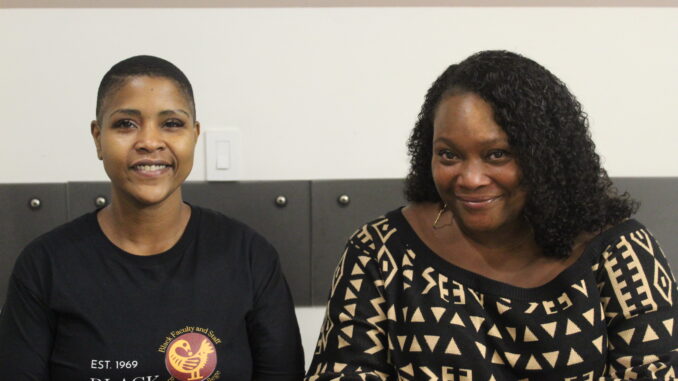
The Black Solidarity Committee hosts Black Solidarity Day (BSD) annually at Brooklyn College (BC). During that day, a plethora of events that bring the Black community together are held.
Black Solidarity Day began in 1969 at BC, organized by Dr. Carlos E. Russell to foster unity on campus.
This year’s event, on Nov. 3, featured a panel titled “Confronting Critical Issues.”
The panelists for “Confronting Critical Issues” included a midwife, Odessa Fynn, Professor Jared Ball, and Kevin Riley, a Bronx city councilman.
Fynn is a midwife helping to bridge the gap between Black people and the medical care system. Riley is a councilman who serves District 12 in the East Bronx, and just got re-elected for his position this past election season. He’s also a founding member of “The Dad Gang,” an organization meant to uplift fathers. Professor Ball is a Morgan State University professor, author of “The Myth and Propaganda of Black Buying Power”, and host of the “I Mix What I Like” podcast.
During this panel, they held a candid conversation about issues currently affecting the Black community.
“The United States is one of supposedly the most resourced nations in the world, yet these easy statistics are not improving. We see other nations with less resources having better maternal outcomes,” said Fynn.
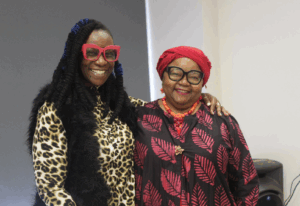
She explains how, in her work as a midwife, she has seen how the medical system perceives Black women to have a “high pain tolerance”, resulting in a lack of attention to the pain Black women feel after labor. “Overwhelmingly, we saw that medically trained nurses, doctors and medical staff […] believe that Black people had thicker skin, that Black people had smaller brains, that Black people felt pain at a lesser rate.”
Fynn goes in-depth with how the US uses propaganda about Black people to fuel the narrative of them being less human. “When you have politicians like Hillary Clinton in the 80s calling the Black body, Black men, and Black boys, super predators, this propagandizing again creates an idea that the Black body is the problem, not the environment that [the] Black body has been put in.”
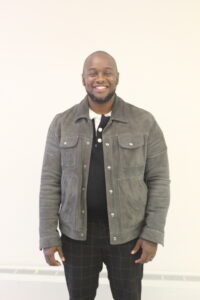
Councilman Riley talked about how little inconveniences snowball into a bigger issue. “When you look at economic opportunities, it is very challenging for us. I was just in the gym with someone who I grew up with, who went through the prison system, and he’s trying to find a job right now.” He continues to explain that though it might look minuscule, it is bigger than the eye can see. “He can’t find a job right now because he doesn’t have any employment history, and nobody wants to hire […] he’s doing this because he wants to be able to go to court and fight for his son. If he doesn’t have a paystub, he can’t care for his child,” said the councilman. Professor Ball discusses the power of the Black community in the economy, also known as “The Black Dollar,” and how we should be better acknowledged for the huge impact Black people have on the economy.
“We should be praised for our consumption, because that’s where all that’s what produces all this problem. Don’t tell me to buy my money, if I’m $45, to me that’s reparations come in.”
The panel discussed what reparations look like in the field in which they currently work. “Reparations on that front would be telling the truth about what is and that there have been lies told about the Black body,” stated Fynn. Professor Ball says that reparations are a very nuanced topic due to their historical context. “There is a lot to be said about reparations, including how it is used in many ways to make more conservative the general struggle for Black liberation.”
Fynn explains why she decided to serve on a panel for BSD.
“As a midwife and community health advocate, I see gatherings like this as essential to the health of our people. Being in solidarity—talking, listening, resting, and planning together—acts as a form of communal medicine that counters the chronic stress, isolation, and fragmentation created by systemic oppression.”
She goes deeper into her personal reasons for what this means to her.
“For me, attending BSD was both a political and a spiritual act—a way to realign with the truth
that our liberation and our health are inseparable.”
After the panel, The Vanguard sat down with a panelist and the event coordinator to discuss further.
Hannah Chin-Phillips was a part of the organizing team for Black Solidarity Day and spoke to the Vanguard about how events like these are crucial, especially in this political climate. “ Black Solidarity Day is a call for people of African descent to step away from work, school, and shopping to show the collective economic and cultural power of Black communities,” stated Phillip.
She stated that this tradition must be kept because the community is important.
“Upholding this tradition each year at Brooklyn College honors that legacy, and connects generations of students, faculty, and staff to a rich legacy of Black radical history and collective struggle.”