
By: Emily Nixon
In recent weeks, multiple Undergraduate Student Government (USG) senators have alleged that USG President Robert Echevarria committed various acts of misconduct, ranging from making Islamophobic comments to recording USG meetings without consent from senators.
“These allegations and everything are being brought up in a space that’s not the appropriate space,” said Echevarria. “What’s not appropriate is to bring out dirty laundry in a sense at a cabinet meeting. Cabinet meetings, this is where we conduct the business of USG, and we want to keep it productive as much as we can.”
Echevarria alleged that a mediated discussion was declined between himself and the senators accusing him of misconduct the weekend before the Oct. 29 meeting, where the allegations were first launched.
“[The accusers and I]’ve never had a mediated discussion,” said Echevarria. “There was an offer saying, ‘hey, let’s do some kind of mediation’, and that mediation was declined.”
Echevarria recording the meetings was a point of contention for multiple senators.
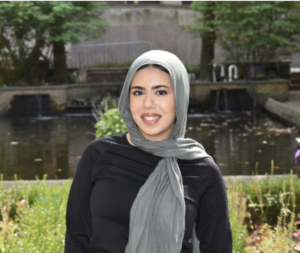
“I think when it comes to recording and also being in a position of leadership and power, there needs to be a level of sensitivity and boundaries in order to create an environment where students feel comfortable,” said Mahnoor Ahmed, the student advocate at USG. “At the very least, students and representatives should be informed they are being recorded, if not, it makes it seem as if the recording may be some type of weapon to use against them, which creates a hostile environment that leads students to be wary of their president.”
While New York’s open meetings law allows any party to make recordings of public portions of public body gatherings, four members of USG drafted an executive resolution to prohibit recordings without the full informed consent of USG members present at the meetings.
“My concern is not about the legality of recording. It is simply about being informed,” said Katherine Hepburn, USG Treasurer, in a statement to The Vanguard. “I believe that when individuals are participating in a Cabinet meeting, they should be made aware if the meeting is being recorded. To me, this is a matter of basic transparency, professional courtesy, and mutual respect.”

The resolution was sent by Chief of Staff Deborah Bernfeld, Press Director Amnerys Taveras, Treasurer Katherine Hepburn, and Student Advocate Mahnoor Ahmed. The allegations against Echevarria have primarily been shared through these students as well, according to official meeting minutes posted on the USG website.
In minutes published from the Oct. 29 USG meeting, Bernfeld alleged that Echevarria’s communications to USG senators were lengthy and often ill-timed.
“Mr. Echevarria shares an excess amount of information with his cabinet regardless of relevance on a daily basis,” said Taveras in a statement to The Vanguard. “Therefore, I personally believed that Mr. Echevarria should’ve shared the fact that he would be recording, not because he was legally obligated to, but because I believed that he had respect for me as a cabinet member.”
The delay between the incidents and the accusations was a point of suspicion for Echevarria.
“I’ve spoken to them over the summer, and I had those long messages, and this was going back before we got into office in July,” recounted Echevarria. “Nobody ever shared that they felt the way that they felt […] they only started sharing this in October.”
In the Oct. 29 meeting minutes, Hepburn and Bernfeld alleged Echevarria made an anti-Semitic remark. Anti-Semitic means “a certain perception of Jews which may be expressed as hatred toward Jews,” according to the U.S. Department of State. The remark, as stated in the minutes, was, “This food was promised to [the Jewish people] 3,000 years ago.”
“Antisemitic remarks should not be dismissed as harmless jokes simply because they are delivered casually or in a joking manner,” said Hepburn. “I believe the President should be held accountable for the example he sets through his words and actions.”
Echevarria refuted this allegation in an interview with The Vanguard, claiming that he did not say “3,000 years ago.”
“I never acknowledged food, even in that meeting,” said Echevarria. “The statement was that 300 sodas were not promised to them.” For transparency, the club mentioned in this incident is a Judaic cultural club.
In screenshots of messages provided to The Vanguard, Echevarria can be seen addressing this incident.
“Also, 100 cans of each of these 3 different beverages?” state the messages. “So, 300 cans in total? That’s a crazy ask.”
In the same text thread, Echevarria states, “300 cans of soda were not promised to [a BC club president].”
Ahmed alleged multiple incidents revealed a pattern of Islamophobia and racism exhibited by Echevarria.
“In regard to the comments he made about the [Muslim Student Association (MSA)] brothers being sexist, he had admitted that this was speculation, which to me shows he has a bias against Muslim men, as he again repeated similar comments about the GSO president who is also Muslim,” said Ahmed.
In screenshots of messages provided to The Vanguard, Echevarria is seen addressing an incident that occurred between Graduate Student Organization President Adil Hussain and USG members.
Hepburn can be seen telling Echevarria that Hussain “made a weird look when [Hepburn] mentioned that [Hepburn works] with [Echevarria].”
In these messages, Echevarria can be seen stating, “[Hussain] doesn’t like women in leadership roles,” to which Hepburn replied, “makes sense.”
Echevarria refuted the allegation in an interview with The Vanguard.
“These observations were based on different pieces of information, and there was never a hasty generalization made, saying that, ‘oh, all men or all of the people of this religion-’ that never occurred,” said Echevarria.
In the Oct. 29 minutes, Echevarria claimed that the interpersonal relationship between Ahmed and him provided enough comfort to share these speculations about character.
“I trusted them. I’ve known Katherine for three years, and I’ve known Mahnoor for a whole year,” Echevarria told The Vanguard. “With that trust that I had in them, that was why I was comfortable in the cabinet meeting to say, ‘okay, if this is how we want to do it, that’s perfectly fine.’”
Ahmed rejected this notion in a statement to The Vanguard.
“I did not believe we had grown a personal relationship as all our conversations and experiences together surrounded USG,” said Ahmed. “Furthermore, no friend or individual has ever made these comments to me, no matter how close we were to each other, so in my opinion, this is not a justification for these comments and actually sheds light on Mr. Echevarria’s true thoughts when he feels comfortable enough with someone.”
Taveras alleged in the Oct. 29 minutes that Echevarria “code-switched” when speaking with them.
Code-switching is when someone adjusts their identity to blend in and conform to a larger group. Most often, this is done to draw attention away from an individual’s race, ethnicity, religion, and sexual orientation, among other factors, according to Cleveland Clinic.
“Mr. Echevarria and I commonly spoke on only USG-related matters,” said Taveras. “In some of Mr. Echevarria’s responses he would, in a way, either begin to speak in a way that resembles my accent or use words that I didn’t normally hear him use with other cabinet members, words such as “finna” and “gang” […] micro-aggressions like these is what allows for bigger things to stem in the future.”
Echevarria refuted this claim in an interview with The Vanguard.
“I’ve never code-switched with her,” said Echevarria. “I said [to Amnerys], ‘And if it has ever occurred and you felt that way, it never occurred intentionally, but I always make sure that I’m always coming off as myself.’”
Other Senators such as Andy Ramos Herrera question the validity of the allegations against Echevarria.
“I believe that most of their approach at this whole matter is to steamroll and to lead with emotions and to bark, bark. Bark,” said Ramos Herrera. “But there is no substance to said bark. There is no bone to bite on […] I don’t really see much substantial evidence.”
This is a developing story. The Vanguard will continue to report as new information emerges.