
By: Samantha Colon
The Public Health and Medicine (PHaM) Club is cooking up a storm at Brooklyn College (BC) with its six-week Cooking Frenzy. Starting on Oct. 20, PHaM is hosting educational cooking events every Tuesday in partnership with City Harvest; New York City’s first and largest food rescue organization focused on targeting food insecurity. In addition to targeting food insecurity, City Harvest is dedicated to providing nutritional education in New York City, through events such as this one.
The classes take place during BC common hours, from 12:30 to 2:30 p.m., in the Food Science Lab on the fifth floor of Ingersoll. The event gave students an opportunity to learn new cooking skills, explore healthy recipes, and enjoy free food along the way.
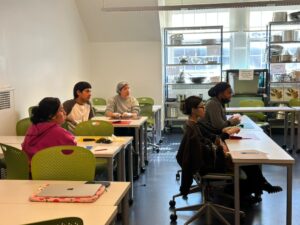
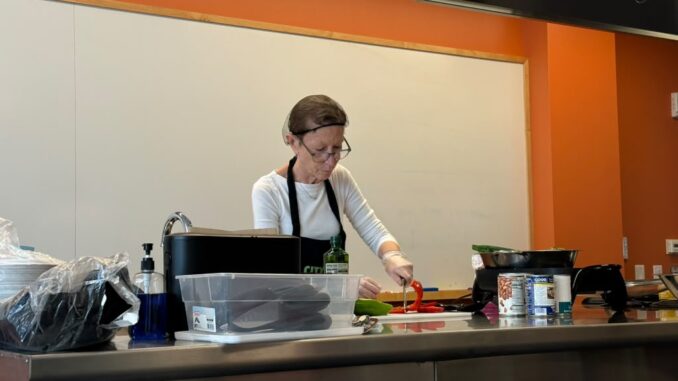
In the first installment of the Cooking Frenzy, City Harvest representatives came to teach BC students about knife safety and how to balance meals nutritionally with a demonstration on making vegetarian chili. Students learned about the ingredients that go into making the dish and how small changes to a recipe can make a meal healthier. City Harvest partner Sofia Gilary explained the benefits of eating beans and how yogurt can substitute for sour cream as a lower-fat alternative. As the chili was almost ready for serving, the aroma filled the lab and eventually every participant received a serving of chili. Students who attended the event were able to enjoy the meal they had just learned about while spending part of their common hours learning something new.
On the other side of the Food Science Lab, PHam e-board members and event leaders Melana Raju and Noor El Sharkawi were preparing two recipes of their own. While the City Harvest representatives demonstrated vegetarian chili, Melana and Noor worked on dishes inspired by their own interests and backgrounds. Their recipes showcased how healthy cooking can incorporate different ingredients, flavors, and cultural traditions. Inspired by the heart-healthy benefits of Mediterranean cuisine, Raju prepared a Mediterranean salad.
“Mediterranean food is known for its benefits, so I decided to make a Mediterranean salad for the Public Health and Medicine Club,” Raju said as she washed a cucumber for her salad.
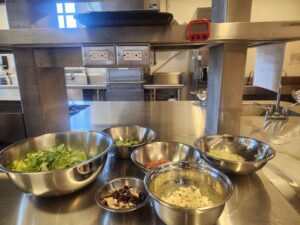
Raju’s salad contained romaine lettuce, onions, olives, cucumbers, and a homemade feta-cheese dressing. The combination of fresh vegetables and other ingredients made for a colorful addition to the dishes being prepared in the lab. Raju’s recipe showed students how to prepare healthy food with familiar ingredients.
Her choice of a Mediterranean salad also reflected the club’s focus on public health and nutrition. Learning about healthy eating does not always have to involve intricate recipes or unfamiliar ingredients. Sometimes, putting together a meal with fresh vegetables and a homemade dressing is a good place to start. For students who are interested in improving their eating habits, learning simple recipes can make cooking at home feel more manageable.
Noor, on the other hand, was inspired by her Egyptian heritage to make “[Ful medames], it’s a bean based dish which my father often makes,” Sharkawi said. Ful medames is a traditional Egyptian dish made with fava beans and flavored with cumin and garlic. Sharkawi used six cans of fava beans to prepare the dish. Unlike Raju’s salad, Sharkawi’s recipe involves cooking and is a bean stew, often eaten with bread.
By bringing a recipe inspired by her Egyptian heritage into the kitchen, she was able to share a familiar dish while introducing students to another way of preparing beans. Using other alternatives like beans can make a difference in your health. “Beans are a good source of protein and fiber, making them a useful ingredient in vegetarian meals” according to the National Library of Medicine..
Beans are a common ingredient in many cuisines around the world, and they can be prepared in a variety of ways. Between the vegetarian chili demonstrated by City Harvest and Sharkawi’s ful medames, students had the opportunity to see how beans can be used in different recipes. After finishing their cooking, Raju and Sharkawi packed the dishes into plastic serving bowls to be placed in the community fridge, allowing students to stop by and grab a free, healthy meal.
Students who were unable to attend the session could still benefit from the meals prepared in the lab. The PHaM community fridge gives students a way to access food on campus. Many college students find it difficult to balance preparing meals between classes alongside other responsibilities. Having prepared food available can make it easier for students to grab something to eat during the day.
By preparing dishes for the fridge, PHaM members demonstrate their commitment to helping make food available to other members of the BC community.
The Cooking Frenzy will continue with more recipes and opportunities for students to participate. On Oct. 27th, in the spirit of fall, Sharkawi and Raju will be making pumpkin pasta in the Food Science Lab.
With pumpkin being a popular seasonal ingredient, the upcoming event will give students another opportunity to learn about cooking in a fun fall way.
Whether students are already comfortable in the kitchen or just starting to learn, PHaM is committed to improving BC’s cooking skills development and access to healthy food.
For more information regarding PHaM, visit @bc.phamclub on Instagram. For more information on City Harvest, visit their website: https://www.cityharvest.org